
How AI-enhanced XD Drives Operational Efficiency

Adam Marks

Adam Marks

Principal User Experience Designer

Share on LinkedIn
Share on X
Share on Facebook
Share on WhatsApp

In this article:

  • Protecting Project ROI: Learn how integrating design into the SDLC eliminates 50% engineering waste typically lost to avoidable rework and manual handoffs.
  • Assets over Artifacts: Why the future of IT modernization relies on building functional, reusable code assets rather than static, disposable design files.
  • Accelerating Time-to-Value: Move from sequential bottlenecks to parallel delivery workstreams to protect brand equity and hit market windows faster.
  • Pragmatic AI Strategy: Focus on AI as an operational multiplier for structural tasks, freeing high-value talent for high-impact business logic.

The most successful organizations won’t be those that use AI to generate the most content, but those that use it to integrate their teams and deliver value with the highest possible efficiency.

What is AI-enhanced XD?

AI-enhanced XD is a methodology that integrates artificial intelligence into the design process to accelerate production and improve decision-making. Unlike AI-generated design, which relies on a machine to create a final product, AI-enhanced XD uses AI as a collaborative partner. It plays an active role in the AI software development lifecycle (AI SDLC) to handle data-heavy tasks, ensure system consistency, and bridge the gap between design and code.

By moving away from static design files toward an AI-integrated workflow, organizations can achieve a level of precision and speed that traditional methods cannot match. It moves AI from a passive tool to an active, autonomous partner that can manage intricate workflows from end-to-end.

Executive Insight: AI-enhanced XD is not about replacing designers; it is about easing the friction in the design process. It allows your team to spend 20% of their time on execution and 80% on the high-level strategy that McKinsey and NN/g research shows drives market differentiation and revenue growth.

How do traditional design handoffs impact project ROI?

Traditional design handoffs require consistent collaboration, which is time intensive. Intent needs to be translated. Decisions re-made. Alignment takes effort, attention, and constant reinforcement. When design and engineering operate in silos, project intent is lost in translation. This creates a cycle of expensive rework where teams must revisit decisions during the build phase because the original designs were not technically viable.

The financial impact is significant: According to McKinsey Digital’s 2026 analysis, up to 50% of engineering capacity is often spent fixing avoidable misalignments rather than building new value. By integrating design directly into the SDLC, organizations move from reactive fixing to proactive delivery. This shift protects your capital investment and ensures your product hits the market on schedule, a differentiator that McKinsey correlates with 20% higher revenue growth.

Direct Impact: Reducing handoff friction transforms design from a step in the process into a driver of capital efficiency.

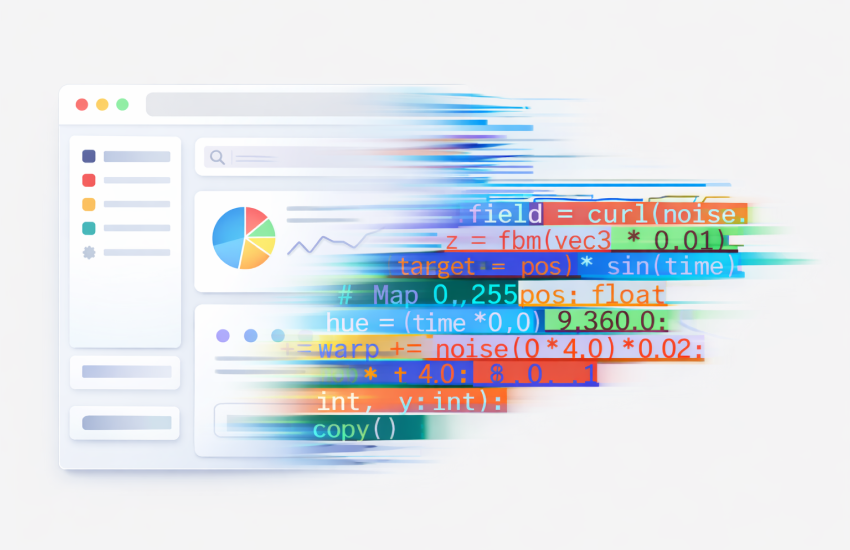
Conceptual image showing design layout translating to code

Can AI-enhanced XD protect your modernization investment?

For business leaders, IT is one of their largest capital investments. As AI becomes embedded in how software is built, design will no longer sit adjacent to the SDLC. It can live inside it, closer to the system, closer to implementation, and closer to the decisions that ultimately shape what ships.

Positioning XD as a central driver of modernization moving into 2026 ensures that new systems are not just technically sound, but functional and adopted by users.

  • Capital Efficiency: Validating design decisions against real-world technical constraints in real-time prevents the development of unbuildable or low-value features.
  • Building Assets, Not Artifacts: Instead of static files that become obsolete, teams create functional, reusable code components. These serve as long-term assets that accelerate future builds.
  • Operational Resilience: Build systems that are adaptable to changing customer behaviors. This prevents the accumulation of technical debt and keeps your infrastructure relevant.

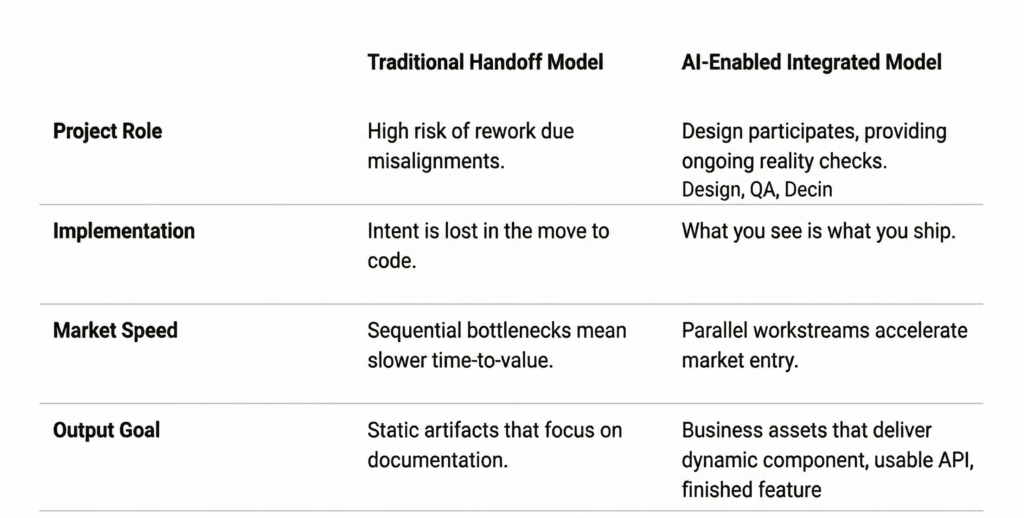
The business value shift: Sequential vs. parallel delivery

To protect brand equity and market share, leaders need to move from sequential bottlenecks to parallel acceleration.

Table that details the shift to parallel acceleration

How does a pragmatic approach to AI improve operational efficiency?

AI is exceptionally good at handling structural tasks, scaffolding layouts, surfacing inconsistencies, and generating component variations, at a speed no human can match. The goal is to use AI to remove friction and accelerate the path from a business requirement to a live digital asset.

As design moves inside the SDLC, traditional measures of efficiency start to break down. Speed alone isn’t the goal. Neither is automation for its own sake.

Efficiency starts to look more like reduced rework. Fewer handoffs. Fewer mismatches between intent and implementation. AI helps by getting teams to higher-fidelity outcomes earlier, grounded in real systems and constraints rather than abstractions.

The business can move faster without sacrificing quality or brand integrity.

  • Reduced Time-to-Market: Parallel workstreams allow for faster iterations and quicker responses to market shifts.
  • Brand Protection: Ensuring that the final product matches the intended brand experience from day one.
  • Resource Optimization: Shifting budgets from fixing miscommunications to building new features.

Redefining what's possible

By 2026, the most successful organizations won’t be those that use AI to generate the most content, but those that use it to integrate their teams and deliver value with the highest possible efficiency.

The sky isn’t the limit. It’s the starting line. As technology evolves at a breakneck pace, the fusion of world-class UX and next-generation capabilities will expand what product teams are capable of delivering. A year from now, we won’t just be pushing boundaries. We’ll be redefining what’s possible, because design is no longer reacting to modernization. It’s helping drive it.

Tags

Ready to streamline your modernization efforts?

Start building your digital ecosystem